
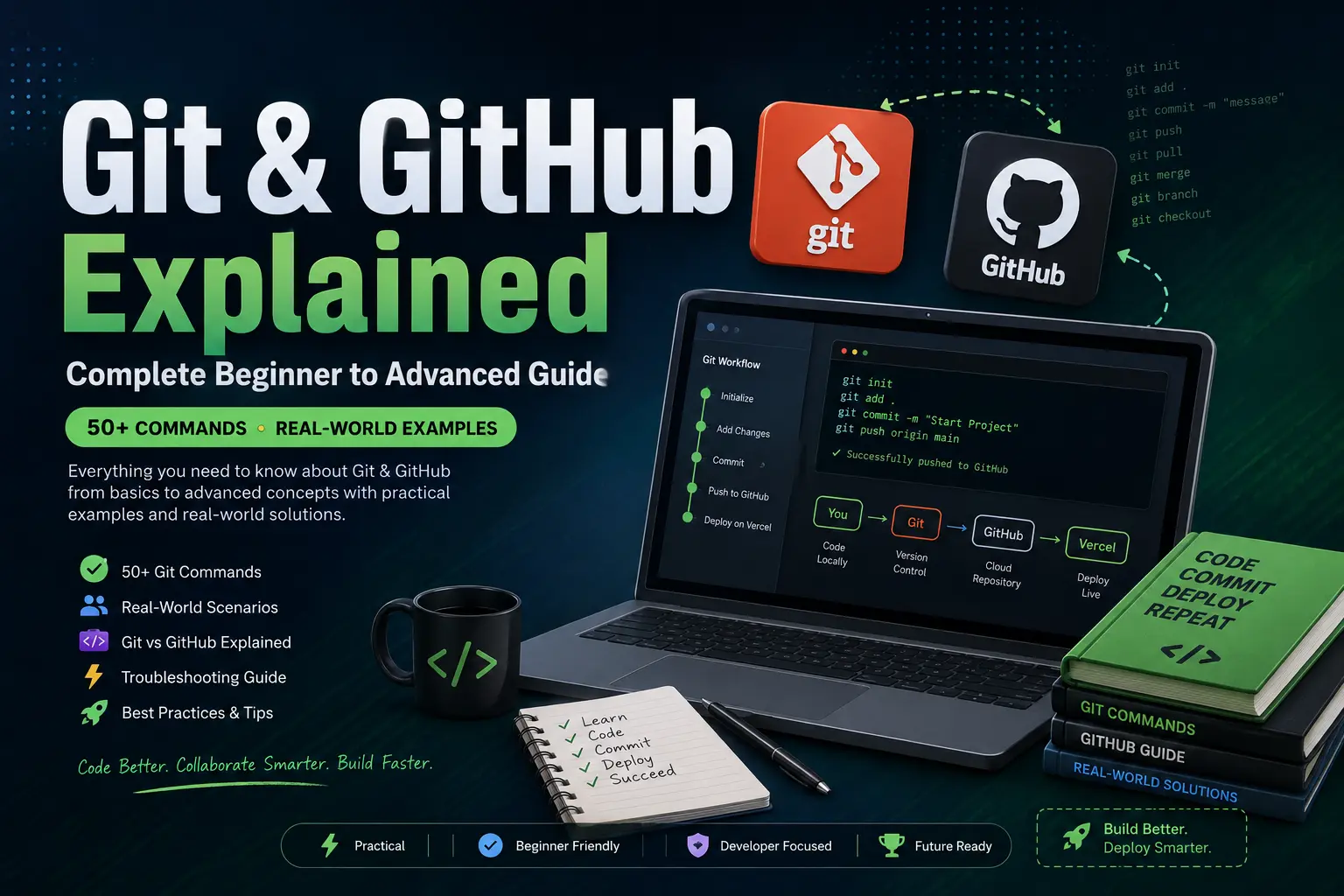
Git and GitHub Complete Guide for Beginners
A comprehensive handbook for modern version control: branching architectures, merge conflict resolution, pull request workflows, and 50+ practical Git commands.
Read Comprehensive Guide →Curated AI roadmaps, practical developer tools, production-grade technical tutorials, and a thriving peer network — zero paywalls, always free.
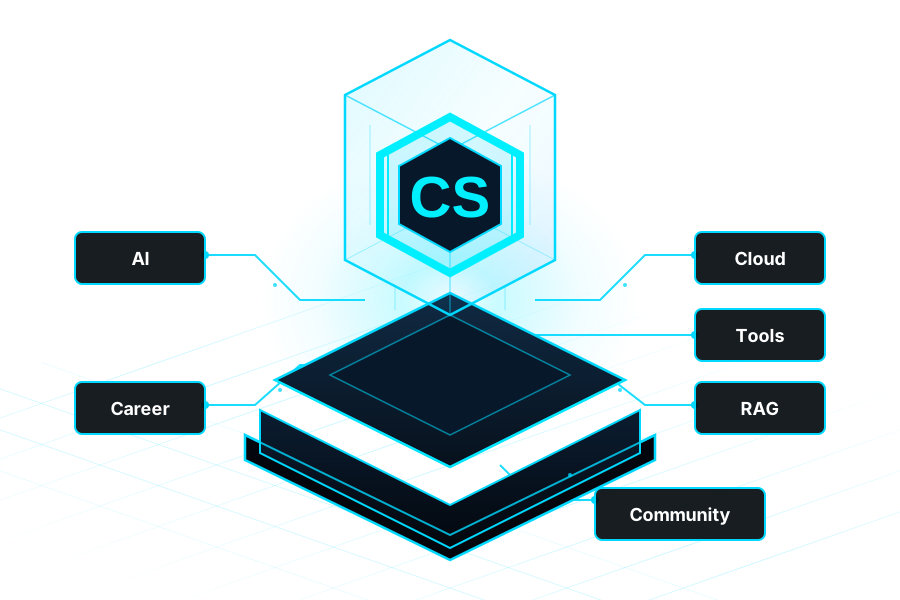
CHOOSE YOUR PATHWAY
Select the focus area that fits your current objective. Practical, modular, and built for execution.
LegalLens grounded AI contract navigator, salary & tax calculators, SQL formatters, and developer toolkits.
Launch Tools →
Sharpen your algorithmic thinking, system design logic, and AI troubleshooting capabilities.
Start Practice →
End-to-end technical roadmaps, compensation benchmarks, and interview preparation for modern engineering roles.
View Roadmaps →
Collaborate with fellow engineers, get constructive feedback on projects, and build alongside peers.
Join Network →AI LEARNING JOURNEY
A structured, six-stage roadmap taking you from fundamental concepts to real-world AI applications and workflows. Click any stage to inspect the curriculum.
Start here: core concepts, terminology, and how modern AI works.
LLMs, multimodal models, and how AI generates text, code, and media.
Techniques, frameworks, and system prompts to get the best outputs from AI.
Connect LLMs to external data using embeddings and vector search.
Autonomous systems that reason, use tools, and accomplish complex goals.
Real-world projects and workflows to apply everything you've learned.
Master the core building blocks: Python for data science, linear algebra, calculus intuition, probabilities, and fundamental machine learning algorithms.
This module provides the necessary foundations before progressing into Transformer neural architectures and LLM prompt design.
Start Stage 01 Curriculum →Dive into attention mechanisms, self-attention, tokenization, positional encodings, and how foundation models (GPT, Claude, Gemini, Llama) process language.
Understand the mathematical structure behind generative transformers before building prompts and agentic toolchains.
Start Stage 02 Curriculum →Go beyond basic chat prompts into structured production prompt architectures: Chain-of-Thought (CoT), ReAct framing, JSON schema enforcement, and guardrails.
Learn how to extract deterministic, schema-validated JSON outputs from probabilistic generative language models.
Start Stage 03 Curriculum →Architect enterprise Retrieval-Augmented Generation systems: chunking strategies, hybrid dense/sparse search, re-ranking models, and vector database management.
Ground LLMs with your own private documents and engineering databases without expensive retraining.
Explore the RAG Guide →Build autonomous agents capable of dynamic tool calling, persistent memory, planning, human-in-the-loop validation, and Model Context Protocol (MCP) integration.
Move beyond question-answering bots into proactive autonomous systems that execute code, query APIs, and solve multi-step problems.
Explore AI Agents →Ship resilient, cost-effective AI products into production: streaming UI, caching, automated LLM evaluation suites (Ragas), tracing, and fine-tuning with LoRA.
Explore the skills and learning path for a career building AI systems.
Explore the AI Engineer Roadmap →PRACTICAL GUIDES
Zero-filler technical walkthroughs covering Git architectures, production cloud hosting, and Generative AI application engineering.
A comprehensive handbook for modern version control: branching architectures, merge conflict resolution, pull request workflows, and 50+ practical Git commands.
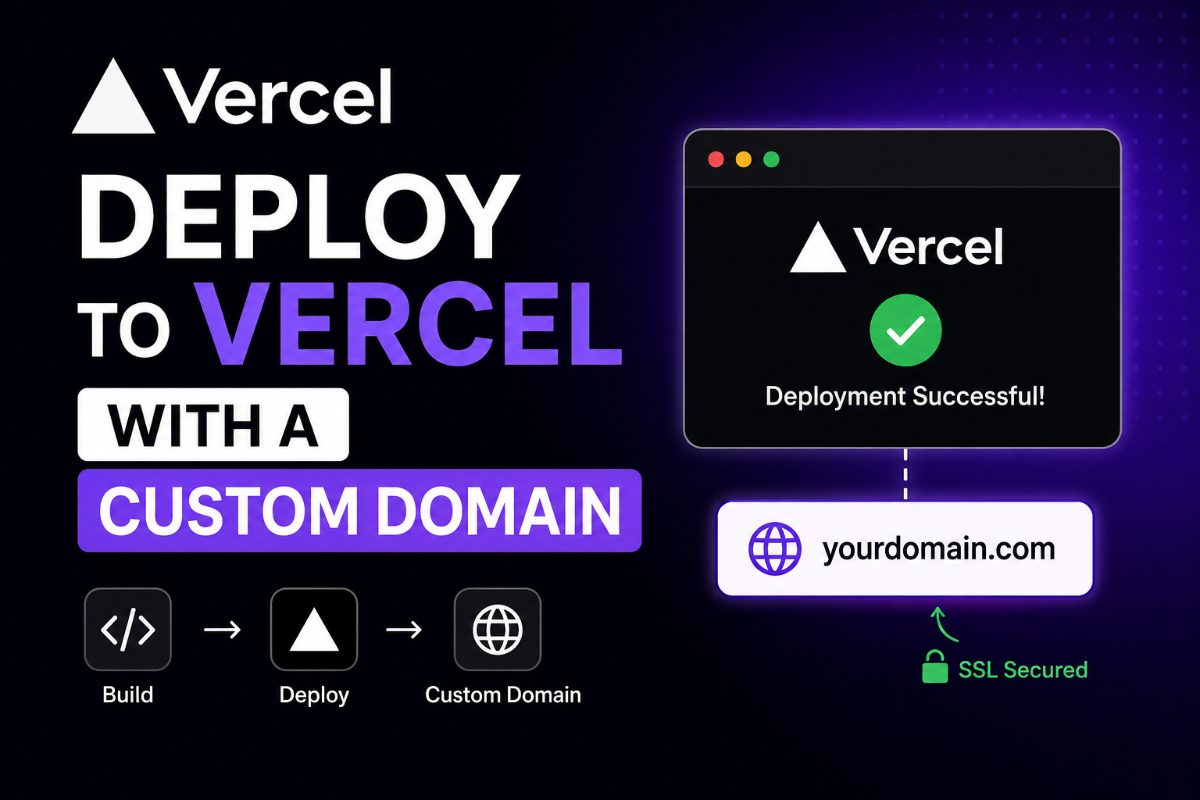
Read Comprehensive Guide →Step-by-step walkthrough covering GitHub continuous integration, DNS propagation, SSL certificates, and environment variables.
Read Guide →Demystifying foundation models, token mechanics, temperature controls, and system prompting for software engineers.
Read Guide →CAREER ACCELERATION
Comprehensive skill trees, compensation expectations, and milestone checkpoints for today's most in-demand technical roles.
Master Python, PyTorch, LangChain, Transformers, and LLM production deployments with hands-on projects.
View Full RoadmapArchitect scalable data pipelines, SQL transformations, distributed Apache Spark workloads, and modern data warehouses.
View Full RoadmapNavigate modern cloud infrastructure: AWS, GCP, Docker, Kubernetes container orchestration, and Terraform IaC.
View Full RoadmapOUR CORE PRINCIPLES
Every tutorial, tool, and roadmap is engineered to provide actionable knowledge with zero unnecessary theory.
All curriculum stages, interactive tools, and roadmaps are completely open. No paywalls or bait-and-switch tiers.
Built by engineers with active industry backgrounds. Every guide is grounded in real production architectures.
Learn by doing with live calculators, interactive code diagnostics, and real-time syntax visualizers.
Curriculum refreshed regularly to reflect the fast-moving AI landscape, MCP specs, and new framework releases.
COMMON QUESTIONS
Everything you need to know about Cyvora Studio and how to maximize the platform.
Cyvora Studio is a free educational platform providing practical AI tutorials, developer productivity tools, technical deep-dives, career roadmaps, and community support for developers, students, and professionals.
Yes. All tutorials, articles, roadmaps, and interactive developer tools on Cyvora Studio are 100% free with no paywalls or required subscriptions. Our goal is to make top-tier tech education universally accessible.
Content is created by Suman Chaitanya alongside experienced industry contributors. All tutorials emphasize production-grade patterns rather than abstract toy examples.
Cyvora Studio covers Artificial Intelligence, Generative AI, Prompt Engineering, RAG Architectures, AI Agents & MCP, Cloud Infrastructure, Git & CI/CD, Full-Stack Development, Data Engineering, and Career Optimization.
You can join by heading over to our Community page, where you can connect with fellow developers, share your projects, and ask questions.
Connect with ambitious peers, share architectural blueprints, get answers to complex development roadblocks, and grow together.
Join Community Hub →